
Back to: Tenure Toolkit
What is our level of readiness? Do we have an effective governance structure?
Operating a forest tenure is both an economic development opportunity and a responsibility for stewardship. To succeed, Nations need strong governance structures that separate business decisions from political decisions, while still aligning with community values and goals.
A Nation can establish a fully owned economic development company to manage forestry projects. These companies, often set up as limited partnerships, protect the Nation from financial, governance, and safety liabilities by:
- Creating a business-focused governance model aligned with best practices
- Maximizing tax savings
- Limiting risk by:
- Keeping separate bank accounts, financial statements, and GST numbers
- Holding independent insurance to shield the Nation from liability issues
This separation means that some business decisions may be politically unpopular, and not all ventures will be successful. But research from the Harvard Project highlights a key to long-term success: separating business from politics and ensuring that technical assistance needs of businesses are met[1].
Roles and Responsibilities
First Nations Leadership Provides Strategic Direction
- Led by Chief, Council, and hereditary leadership
- Define goals and territory-based planning
- Provide land and resources
- Oversee land use, conservation, and referrals
- Ensure alignment with the Nation’s sovereignty, values, and vision
Economic Development Companies Make Business Decisions
- Operate independently with professional boards and managers
- Manage forest licences and ensure regulatory compliance
- Secure contracts, attract investment, and explore new ventures
- Focus on profitability or, at minimum, no cost to the Nation
- Implement conservation and long-term forest health goals as directed by the Nation

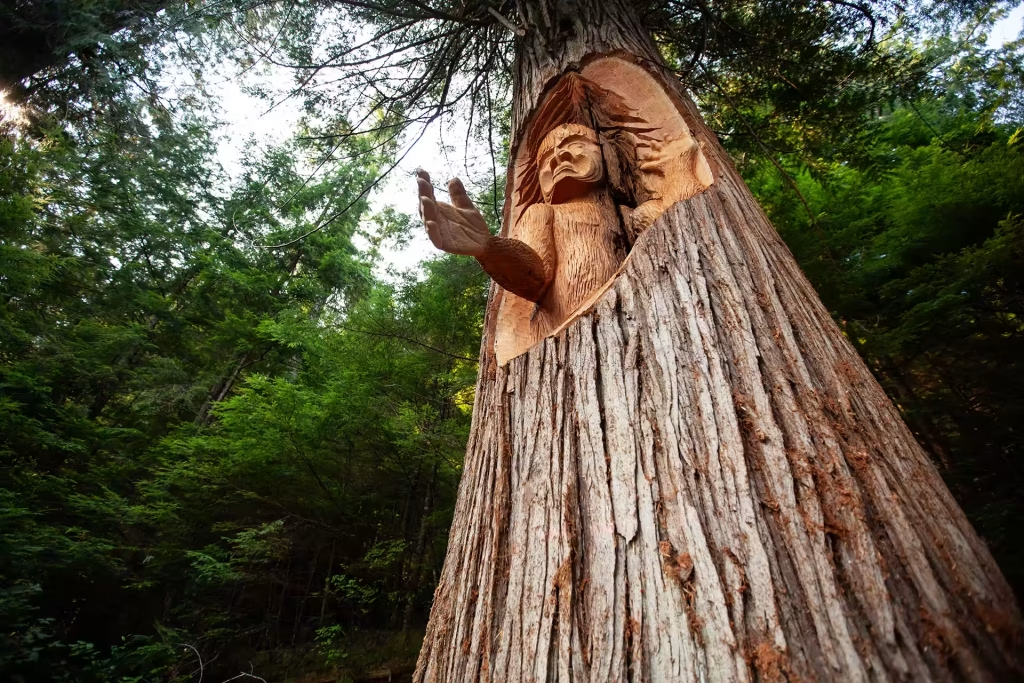
Hybrid Decision-Making: Beyond Timber
According to Dr. Ron Trosper, business decisions do not need to prioritize profits alone. Instead, they can follow a hybrid decision-making model—balancing profitability with resilience, community values, and good relationships with forests and waters.
For hybrid decision-making to work, businesses must:
- Stay profitable and meet the requirements of the external economy and Provincial policy
- Hire knowledgeable professionals who communicate clearly with the community[1]
- Keep relationships with people, lands, and waters at the centre of operations
Risks of Poor Governance
When political leaders interfere in daily operations, the result can be:
- Short-term, politically driven decisions
- Reduced accountability
- Poor performance and higher risk of corruption
To avoid this, leaders should establish a strategy while businesses focus on operations. Forestry businesses are expected to be profitable and self-sustaining, not a financial burden on the Nation.
[1] Trosper, Ronald T. 2000. “Caring Not Competing: The Meaning and Relevance of Indigenous Economic Theory”. YouTube. https://www.youtube.com/watch?v=h8sl-0XIl8M
[1] Jorgensen, Miriam, and Jonathan Taylor. 2000. “What determines Indian economic success? Evidence from tribal and individual Indian enterprises.” Red Ink 8 (2):45-51.